
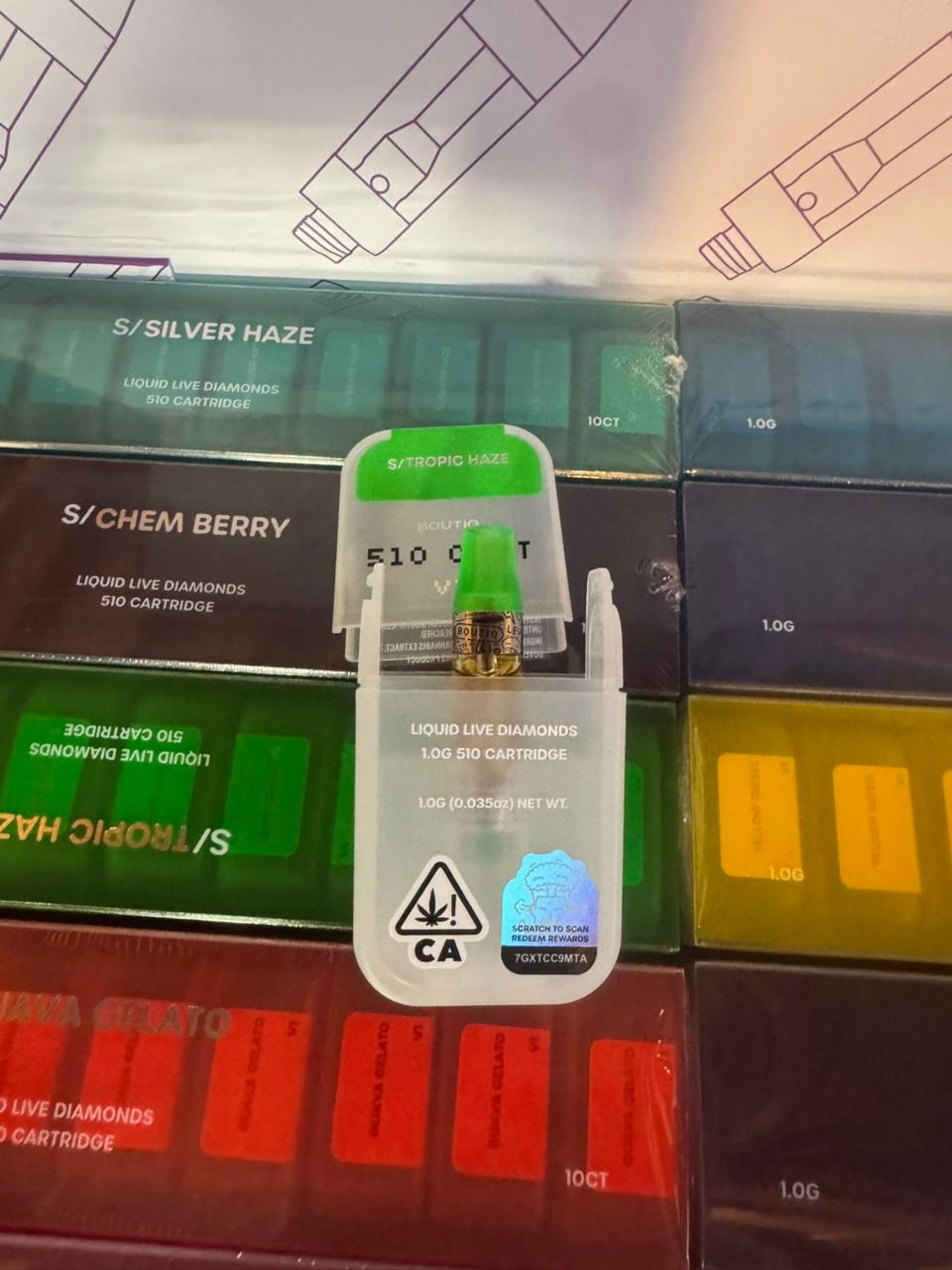
Boutiq 510 Cart V1
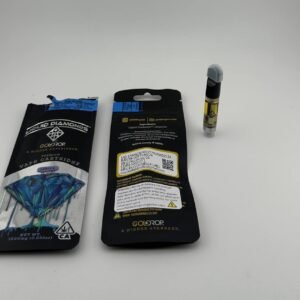
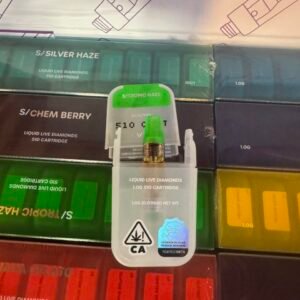
The Boutiq 510 Cart V1 is a prefilled THC cartridge with a 510-thread connection and a stated one-gram extract capacity.
Boutiq 510 Cart V1: A Detailed Guide to the Cartridge, Its Specifications, and Quality Checks
The Boutiq 510 Cart V1 is a prefilled THC cartridge with a 510-thread connection and a stated one-gram extract capacity. Unlike an all-in-one disposable device, it uses a separate battery. Product descriptions identify the contents as Liquid Live Diamonds and list several flavor or strain-inspired variants. Those basic identifiers help distinguish the cartridge, but batch-specific information is necessary to establish its actual composition.
Understanding this product means keeping four things separate: the cartridge hardware, the extract inside it, the battery supplying power, and the documentation supporting its identity. A claim about one does not automatically establish the quality of the others.
This guide explains the Boutiq 510 Cart V1 directly, without invented tasting notes, unsupported performance promises, or claims of hands-on testing. It covers the product format, capacity, extract terminology, flavor names, authenticity questions, and health considerations that belong in a complete assessment.
What Is the Boutiq 510 Cart V1?
The Boutiq 510 Cart V1 is a cartridge rather than a complete vaporizer. Its reservoir contains cannabis extract, while its heating assembly receives power from an external battery. The distinction is important: the cartridge holds the contents, but it does not include every component needed for operation.
An all-in-one disposable combines the reservoir and battery in one body. A separate cartridge keeps those components distinct. Consequently, the cartridge’s performance cannot be assessed independently of the power source with which it is paired.
The V1 label identifies the product edition. It should not be treated as proof of a particular release date, a complete hardware history, or superiority over another version. Those comparisons require model-specific evidence.
For an accurate Boutiq 510 Cart V1 description, the edition, capacity, and batch should remain identifiable throughout the discussion.
What the 510 Connection Means
The 510 designation refers to the cartridge’s threaded connection. It identifies the connection format used to attach the cartridge to a corresponding battery.
That connection matters, but it does not answer every compatibility question. A matching thread does not, by itself, establish that every battery configuration is suitable. Physical fit and appropriate operating requirements are related but separate issues.
A useful product description therefore identifies the 510 format without making an unlimited compatibility promise. Statements such as “works perfectly with every battery” go beyond what a connection label can establish.
For the Boutiq 510 Cart V1, manufacturer documentation should define the intended hardware requirements. Generic advice taken from unrelated cartridges should not replace those specifications. This article does not supply voltage settings or instructions for increasing vapor production.
One-Gram Capacity: Quantity Is Not Potency
The Boutiq 510 Cart V1 carries a stated one-gram extract capacity. That figure describes the amount of material in the cartridge, not the amount of pure THC.
This distinction prevents a common misunderstanding. Cannabis extract can contain cannabinoids and other constituents; its total weight and THC concentration are different measurements. A one-gram cartridge is therefore not equivalent to one gram of THC.
Capacity also does not establish a fixed lifespan. A guaranteed puff count would require a defined testing method, identified hardware, and consistent operating conditions.
The correct way to describe capacity is straightforward: one gram is the stated fill quantity. Duration, potency, and performance require separate evidence. Combining them into a single claim—such as “one gram guarantees a certain number of strong draws”—creates certainty that the capacity figure cannot support.
Liquid Live Diamonds: Understanding the Extract Description
Liquid Live Diamonds is the extract description attached to the Boutiq 510 Cart V1. It is a formulation label, not a complete ingredient statement or laboratory result.
The phrase alone does not identify every cannabinoid present. It also does not establish whether other ingredients have been added, how the final mixture was prepared, or whether a particular batch meets relevant contaminant limits.
A detailed assessment needs information beyond the name. The relevant questions concern cannabinoid composition, declared ingredients, manufacturing traceability, and test results connected to the actual batch.
This does not mean the terminology is meaningless. It means the terminology has limits. A product name can communicate an intended extract category, while documentation establishes measurable characteristics. The two should support each other rather than allowing impressive wording to substitute for evidence.
THC Content and Batch Differences
THC concentration is a batch-specific measurement, not a permanent attribute that can safely be assigned to every cartridge sharing a name.
One Boutiq 510 Cart V1 listing displays 86% THC, while another description gives a broader range. Neither establishes the concentration of an unidentified cartridge. A percentage becomes useful when it can be connected to the relevant sample and testing record.
A review should also distinguish THC from total cannabinoid content. Those terms should not be exchanged simply to create a stronger-looking figure.
Most importantly, potency is not a complete quality score. It does not establish authenticity, hardware reliability, or acceptable contaminant results. A high number answers one composition question; it does not resolve the entire product assessment.
Boutiq 510 Cart V1 Flavor Names
Names associated with the Boutiq 510 Cart V1 include Baja Berry, Blinker Berry, Blue Haze, Blue Mango, Blue Matcha, Grape Ape, Mango Berry, RZ-11, and Arctic Frost. These names appear in product listings, but the available material does not establish a single authenticated catalog covering every edition and batch.
The names follow different conventions. Some emphasize fruit, some resemble strain names, and others suggest cooling or dessert-associated profiles.
Those conventions should not be mistaken for ingredient disclosure. A berry-themed name does not identify the exact compounds responsible for its taste. Similarly, a strain-inspired label does not guarantee a particular cannabinoid profile.
Without verified sensory testing, a review should not invent details about sweetness, aftertaste, aroma intensity, or consistency. Clear naming information is useful; fabricated tasting notes are not.
Why Flavor and Effects Must Stay Separate
Flavor describes a sensory characteristic. Effects concern how the contents influence the person using them. One cannot reliably be inferred from the other.
A fruit-themed cartridge name does not demonstrate that its effects are mild. A familiar strain name does not establish that it will improve focus, encourage sleep, or produce a predictable mood.
The same principle applies to descriptions such as “smooth” and “clean.” These words may express someone’s perception, but they are not chemical findings or safety measurements.
A responsible Boutiq 510 Cart V1 article should keep flavor, composition, and physiological effects in separate categories. That creates a more precise description and avoids turning attractive naming into promises about health, productivity, or personal experience.
Cartridge Construction and Hardware Quality
Descriptions of the Boutiq 510 Cart V1 include ceramic heating elements, a glass reservoir, and metal internal components. These are construction claims that require model-specific verification before they become confirmed specifications.
Even when a material is correctly identified, its presence does not prove flawless performance. Ceramic does not automatically mean clog-free operation. Glass does not establish that the contents are uncontaminated. A metal component does not reveal its manufacturing tolerances or condition.
Hardware quality involves how the components are designed, assembled, and controlled across production—not simply which materials appear in a feature list.
A meaningful assessment would examine physical integrity, consistent assembly, leakage, and performance across more than one sample. Without that evidence, absolute promises about the Boutiq 510 Cart V1 are inappropriate.
Assessing Leakage, Clogging, and Consistency
Leakage and clogging are performance questions. They should be addressed through documented observations rather than assumed from a product’s appearance or extract description.
One cartridge functioning normally does not establish that every unit will behave identically. Equally, one reported fault does not prove a universal design failure. The size and representativeness of the sample matter.
For the Boutiq 510 Cart V1, a strong performance review would identify the edition tested, confirm its origin, describe the assessment conditions, and distinguish observations from speculation.
This guide does not claim to have completed that testing. It therefore does not promise that the cartridge never leaks, never clogs, or maintains an identical sensory profile throughout its contents. Those are measurable claims, not decorative review language.
Laboratory Reports: What to Examine
A laboratory report can provide information about a tested sample, but its usefulness depends on whether it matches the product being assessed.
For the Boutiq 510 Cart V1, relevant identifying details include the sample name, batch number, laboratory identity, and report date. The report should also explain which analyses were performed and show the associated results.
Cannabinoid testing and contaminant testing answer different questions. A potency result does not automatically establish that pesticides, residual solvents, or metals were assessed.
The phrase “lab-tested” leaves these details unresolved unless the underlying record is available. A report image without a matching batch identifier may also be insufficient to connect the findings to a particular cartridge.
Documentation should make the claim inspectable, not merely repeat it.
Authenticity: Real, Fake, or Unverified?
A Boutiq 510 Cart V1 cannot be authenticated solely through a logo, an attractive box, or a familiar flavor name. Those features identify the presentation, but they do not independently establish origin.
A dependable authenticity assessment needs a trustworthy reference for the exact edition and a way to connect the item to its manufacturer or batch records.
Packaging differences also require careful interpretation. Without an authenticated comparison, a difference might reflect an edition change, inaccurate reference material, or another unresolved issue. It should not automatically produce a counterfeit verdict.
When product origin cannot be established, “unverified” is the accurate conclusion. That term preserves the distinction between missing evidence and positive evidence of counterfeiting.
Authenticity questions should be resolved through traceability rather than confident guesses.
What Packaging Can—and Cannot—Tell You
Packaging can provide a product name, capacity statement, batch identifier, ingredient declaration, and other information. Those details create a starting point for assessment.
They become more useful when they agree with independently checkable records. A batch number should correspond to the supporting documentation; the product description should match the identified edition.
However, printed information remains a claim until it can be corroborated. A precise THC percentage is not self-verifying. Neither is a “premium,” “genuine,” or “tested” badge.
For the Boutiq 510 Cart V1, the purpose of checking packaging is to establish consistency and traceability—not to treat polished design as proof. Presentation quality and manufacturing quality are different subjects.
How to Read a Boutiq 510 Cart V1 Review
A useful review explains what its author actually examined. It should distinguish a desk-based overview from a hands-on assessment and separate personal impressions from measurable findings.
Statements about taste are subjective. Claims about contents, contaminant status, or manufacturing consistency require different evidence.
A review becomes less credible when it supplies detailed first-person experiences without identifying the tested product or when it treats seller language as an independent conclusion.
Comparisons also need a defined basis. Calling the Boutiq 510 Cart V1 “better” than another cartridge is incomplete unless the review explains whether it means construction, documented composition, reliability, or some other characteristic.
Clear scope matters more than enthusiastic wording. A limited but honest assessment is more useful than an elaborate review built on assumptions.
Health Considerations for THC Cartridges
THC cartridges contain concentrated cannabis products, and their risks should not disappear behind a discussion of flavors or hardware.
The CDC notes that THC oils used in vaping can contain highly concentrated THC and may include additives or contaminants that could be harmful. It also states that researchers do not yet understand the full consequences of exposure to high THC concentrations. These are general findings, not proof of a specific problem in an individual Boutiq cartridge.
A Boutiq 510 Cart V1 article should therefore avoid presenting concentration as an uncomplicated advantage or describing the product as harmless.
It should also avoid unsupported treatment claims. A cartridge name, flavor profile, or seller description does not establish effectiveness for anxiety, insomnia, pain, or another health condition.
Vaping Safety and Product-Specific Evidence
General vaping concerns and product-specific findings must be kept distinct. Public-health evidence establishes reasons for caution; laboratory testing may establish particular characteristics of an identified sample.
During the EVALI lung-injury outbreak, THC-containing vaping products—particularly those from informal sources—were linked to most cases. Vitamin E acetate was strongly associated with the outbreak. That history does not demonstrate that a particular Boutiq 510 Cart V1 contains the substance.
Both errors matter: ignoring the public-health evidence and incorrectly assigning a specific contaminant to an untested product.
A careful assessment acknowledges the known concerns while refusing to invent product-specific findings. “Not proven contaminated” and “proven safe” are not equivalent conclusions. Missing evidence cannot support either a blanket accusation or a blanket assurance.
Final Assessment of the Boutiq 510 Cart V1
The Boutiq 510 Cart V1 is best understood as a separately powered, one-gram THC cartridge identified by its 510 connection and V1 edition. Its flavor names, extract terminology, and construction claims provide descriptive information, but they do not independently establish authenticity, consistent performance, or safety.
A complete assessment depends on exact product identity, matching batch documentation, and clearly defined testing. Capacity should remain separate from potency; flavor should remain separate from effects; and packaging should remain separate from proof of origin.
The strongest product content makes those relationships clear. It explains what the cartridge is, identifies what can be established, and leaves unsupported promises out—without disguising uncertainty as either praise or condemnation.
Additional information
| FLAVORS | H/ Starfruit, H/Arctic Frost, S/ Blue Haze, H/ Peach Kush, S/ Blinker Berry, S/ Blue Matcha, H/ Mango Berry, S/ Sour Tangie, S/ Pink Haze, H/ Peach Kush, 10PK {MIX N MATCH}, 25PK {MIX N MATCH}, 50PK {MIX N MATCH}, 100PK {MIX N MATCH} |
|---|
Related products


Reviews
There are no reviews yet.