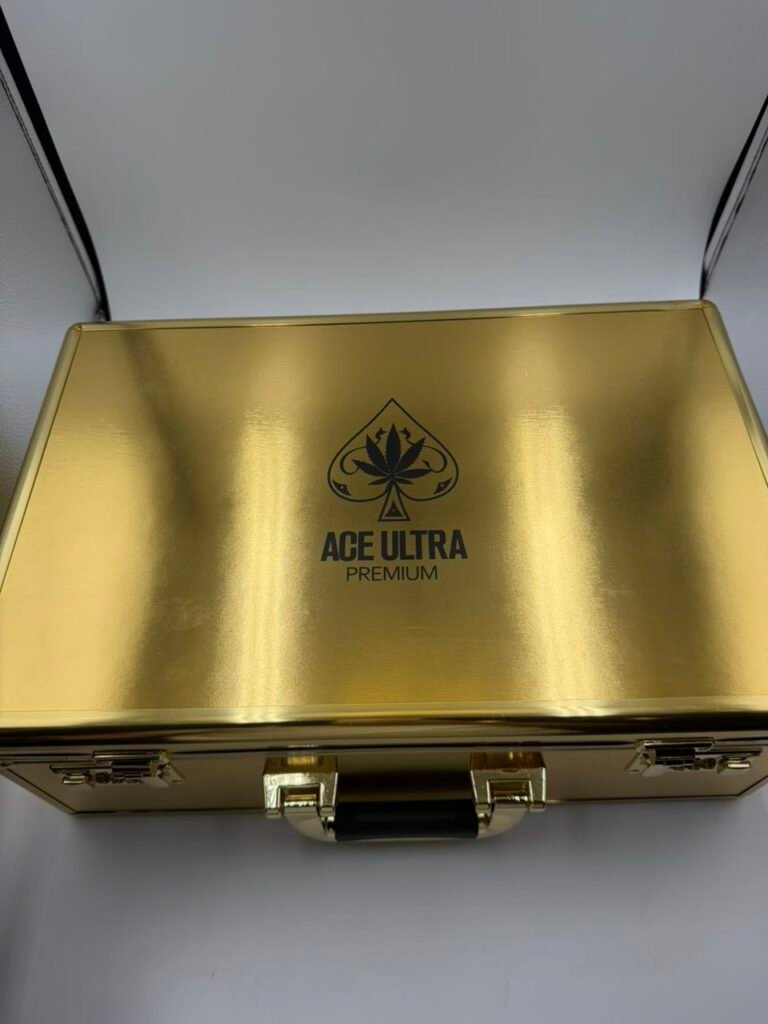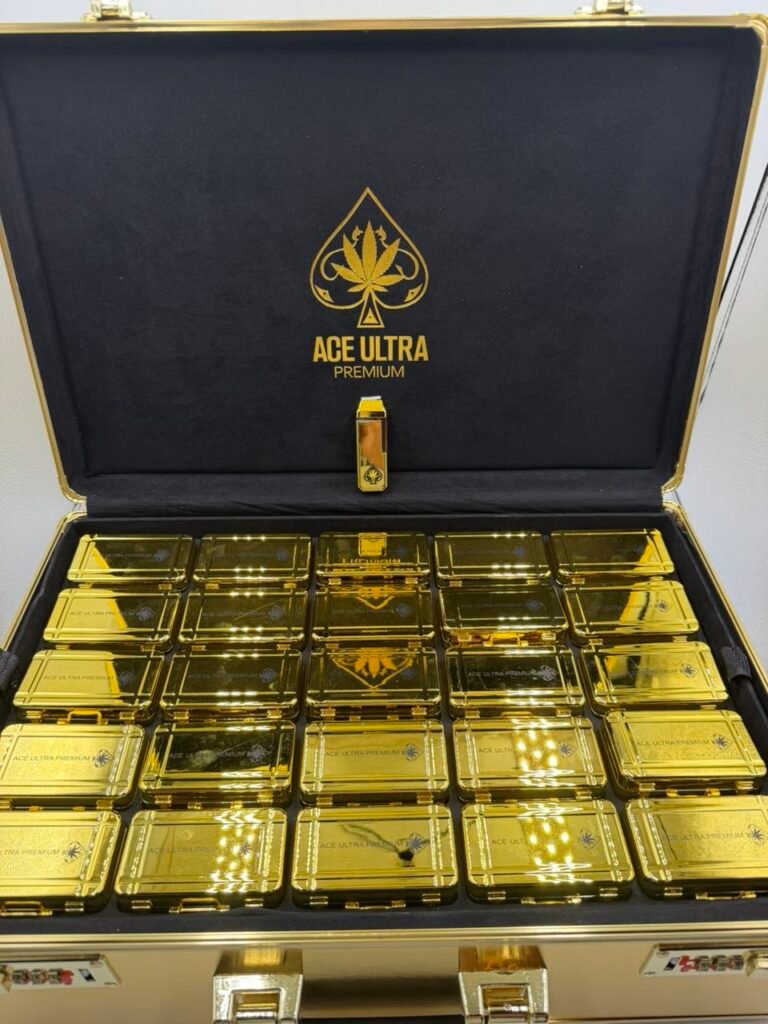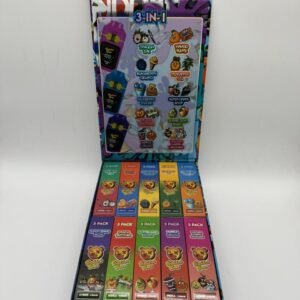
Ace Ultra Premium Real Or Fake
Ace Ultra Premium Real Or Fake: The Complete Buyer Safety Guide
The most accurate answer to Ace Ultra Premium Real Or Fake is that the name itself is not enough to prove a product is authentic, regulated, or safe. Public investigations have reported that Ace Ultra Premium may lack a clearly verifiable licensed manufacturer, while empty branded packaging and devices can be purchased in bulk—meaning every individual product should be treated as unverified unless its legal retailer, manufacturer, batch number, and laboratory results can be independently confirmed.
Ace Ultra Premium Real Or Fake: Why It Matters
The question “Ace Ultra Premium Real Or Fake?” is more than a packaging question. It is a safety question.
Cannabis vape products are inhaled. When an unknown oil is heated and turned into vapor, the user may be exposed to ingredients, contaminants, pesticides, residual solvents, heavy metals, or additives that are not listed on the package. A product can look premium, taste sweet, produce thick vapor, and arrive in a sealed box while still being counterfeit or unregulated.
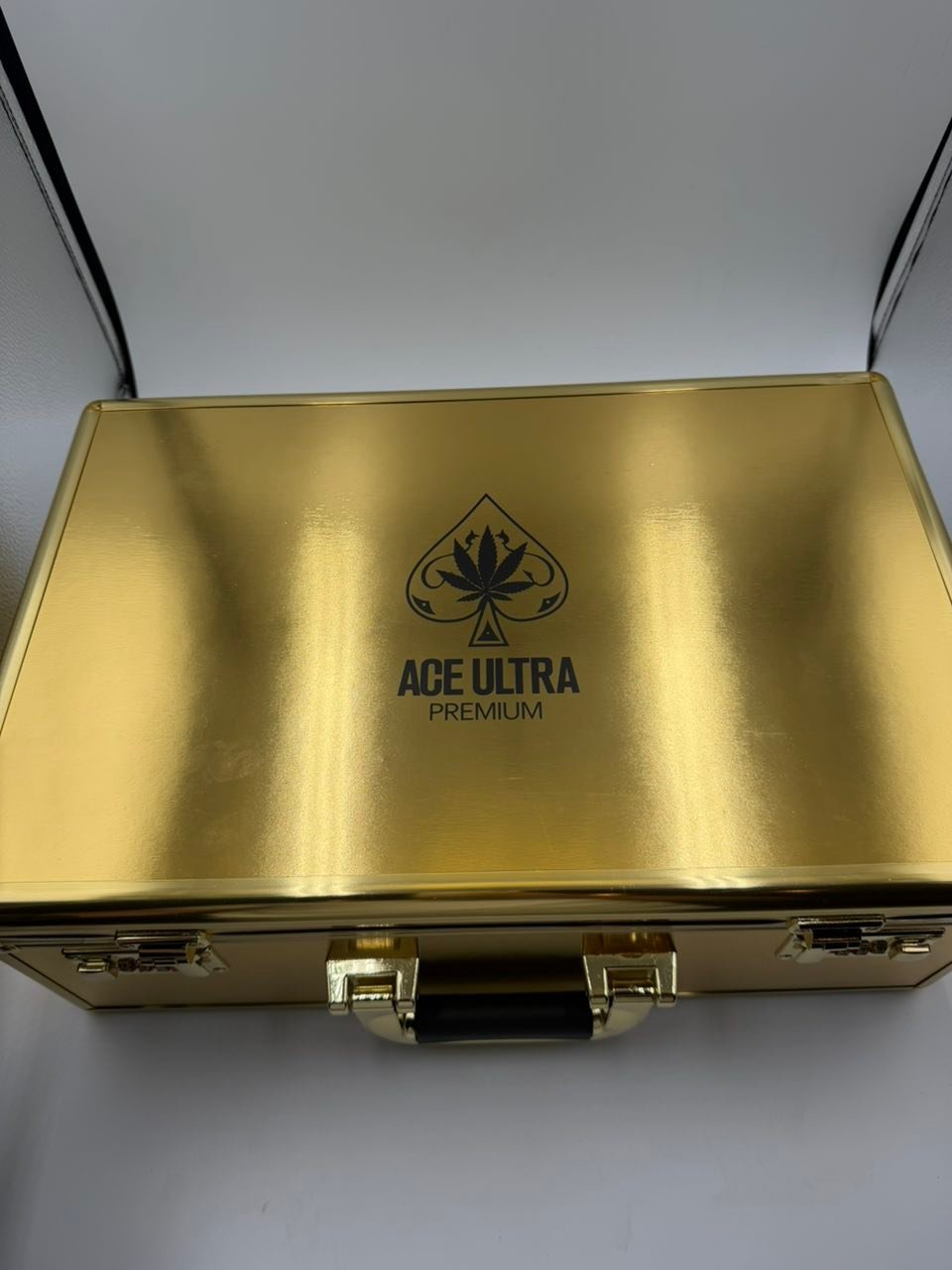
That is why identifying Ace Ultra Premium Real Or Fake should never depend on one visual detail. A gold-colored pen, colorful box, holographic sticker, QR code, strain label, or expensive price cannot independently prove what is inside the device.
The strongest proof comes from a transparent legal supply chain. In a regulated cannabis market, a consumer should be able to identify the licensed retailer, the legal manufacturer, the product batch, and the third-party laboratory report tied specifically to that batch.
If any of those pieces are missing, the safest conclusion is not “real.” The safer conclusion is “unverified.”
Why Ace Ultra Premium Has Raised Concerns
Ace Ultra Premium products are commonly marketed as 2-gram disposable cannabis vapes, usually with strong THC claims, sleek gold hardware, and flavor names associated with fruit, candy, desserts, or cannabis strains. The product can appear polished and professionally presented.
However, a public investigation published in 2025 characterized Ace Ultra Premium as a potential “ghost brand.” The investigation reported that it could not identify a legally registered cannabis manufacturer using the Ace Ultra Premium name in several major legal cannabis markets, including California, Colorado, Michigan, Illinois, and Nevada.
The same reporting highlighted another major problem: empty Ace Ultra Premium boxes, branded packaging, labels, and vape hardware can be sold through wholesale marketplaces. This makes it possible for unregulated sellers to purchase the outer components, fill them with unknown oil, and market the completed item as an authentic product.
This does not mean that every vape with Ace Ultra Premium branding contains the same substance or comes from the same source. It means the opposite: consumers may have no dependable way to know what is inside based solely on the brand name.
That is why the Ace Ultra Premium Real Or Fake question requires more than a quick packaging comparison. It requires verification.
The Difference Between Real, Fake, and Unverified
People often use the word “fake” to describe any suspicious vape. But there are several different possibilities.
| Category | What it means | Consumer risk |
|---|---|---|
| Verified legal product | Made by an identifiable licensed producer, sold by a licensed retailer, and connected to batch-specific testing | Lower uncertainty, though no inhalable product is risk-free |
| Counterfeit product | Uses copied packaging, logos, labels, or branding to imitate another product | High risk because contents and manufacturing are unknown |
| Unregulated product | May not copy a specific product exactly, but is made and sold outside required legal controls | High risk due to unknown ingredients and lack of accountability |
| Unverified product | A consumer cannot confirm its source, manufacturer, batch, or testing | Should be treated cautiously and avoided until verified |
For Ace Ultra Premium Real Or Fake, “unverified” is often the most honest category. A person may see packaging that looks authentic, but if there is no way to confirm the manufacturer and batch-specific lab results, the product cannot be reliably classified as real.
A product is not proven authentic because a seller calls it authentic. It is not proven safe because a website says “lab tested.” It is not proven premium because it has a premium-looking design.
The Licensed Retailer Check
The first and most useful step in determining Ace Ultra Premium Real Or Fake is checking where the product came from.
A legal cannabis dispensary or licensed retailer should have a traceable business identity. Depending on the location, the retailer should be able to show or provide:
- A current cannabis retail license.
- Its legal business name.
- A physical retail location.
- A receipt for the purchase.
- Age-verification procedures.
- Information about the manufacturer or distributor.
- A compliant label with required cannabis warnings.
- A product batch or lot number.
If the product came from an informal seller, social-media account, street source, person-to-person transaction, pop-up table, unclear delivery service, or unverified website, that is a serious warning sign.
A product can still be fake even if it was purchased in a store-like environment. But a licensed, regulated retailer gives consumers a starting point for verification and accountability. Informal sellers usually cannot provide that level of evidence.
When asking “Ace Ultra Premium Real Or Fake?” begin with this simple question:
Can the seller prove that they are legally allowed to sell the product?
If the answer is no, or if the seller avoids the question, do not treat the product as verified.
Batch Numbers and Product Tracking
A real regulated cannabis product should be traceable to a specific production run. That traceability usually begins with a batch number, lot number, UID, or another product tracking code.
The code should be printed clearly on the packaging. It should not look like a random sticker placed over another label. It should match the details on the product’s laboratory report.
When reviewing a batch number, look for consistency:
- The batch or lot number should appear on the box.
- The same batch identifier should appear on the certificate of analysis.
- The product description on the report should match the labeled product.
- The testing date should make sense in relation to the packaging date.
- The laboratory should be identifiable and legitimate.
- The manufacturer or distributor should be named clearly.
A batch number by itself is not proof. Counterfeiters can print random numbers. But a batch number that matches credible laboratory documentation is a much stronger form of verification than packaging alone.
For Ace Ultra Premium Real Or Fake, a missing lot number is a major red flag. A batch number that does not match the lab report is also a red flag. A code that cannot be verified should not be trusted simply because it looks official.
QR Codes: Useful but Not Enough
QR codes are often presented as an authenticity feature. A consumer scans the code and expects it to reveal test results, product information, or a verification page.
In principle, this can be helpful. In practice, a QR code is only as credible as the information it leads to.
A counterfeit product can include a working QR code. The code might direct the consumer to a generic product page, a copied laboratory report, an unrelated website, or a page that makes authenticity claims without supplying meaningful evidence.
When scanning a QR code, do not stop at the first screen. Check whether the information is specific and consistent.
A useful verification page should show:
- The exact product name.
- The batch or lot number.
- Laboratory name and report date.
- Cannabinoid potency results.
- Ingredient information.
- Testing results for relevant contaminants.
- A connection to an identifiable licensed manufacturer.
- Details that match the package in your hand.
If a QR code redirects to a generic “product verified” message, a social-media page, an unfamiliar page with no lab report, or a document that does not match the batch number, the device should be considered unverified.
Some product websites claim that real Ace Ultra Premium packages use NFC technology or a special verification destination. But claims made on brand-style websites do not settle the broader concerns about whether there is a consistently accountable licensed manufacturer behind products sold under the name.
The important question is not whether a QR code works. The important question is whether the QR code verifies the exact legally produced product and batch.
Certificate of Analysis Explained
A certificate of analysis, often called a COA, is a laboratory report that provides information about a cannabis product. In a legal market, a valid COA can help verify what is in the oil and whether the product passed required screening.
A legitimate cannabis COA may include testing for:
- THC, CBD, and other cannabinoids.
- Pesticide residues.
- Heavy metals.
- Residual solvents.
- Microbial contamination.
- Mycotoxins.
- Foreign materials.
- Terpene profile, in some cases.
- Moisture or water activity, depending on the product type.
For an inhalable cannabis extract, potency is only one part of the report. A very high THC result does not prove a vape is safe. Contaminant testing is equally important.
When checking Ace Ultra Premium Real Or Fake, compare the COA to the package. The exact batch number should match. The product type should match. The testing date should be plausible. The laboratory should be independent, named, and verifiable.
Be cautious if the certificate uses vague language such as “premium oil,” “clean cannabis,” or “highest quality” without actual analytical results. Be cautious if the report contains no batch number. Be cautious if every strain or flavor has the same exact potency number. Be cautious if the lab report is blurry, incomplete, undated, or impossible to identify.
A real COA is not merely a colorful image. It is a technical document tied to a specific product batch.
Packaging Signs to Inspect
Packaging inspection can help identify obvious problems, although it cannot prove a product is real.
Some common fake-vape warning signs include blurry printing, spelling mistakes, inconsistent fonts, uneven colors, cheap cardboard, missing warnings, or labels that appear poorly applied. Reports and retailer-style guides also identify missing batch numbers, absent lab information, unusual oil appearance, and implausibly low prices as common signs of questionable Ace Ultra Premium products.
Check the box carefully for the following:
- Clear, sharp printing with consistent colors.
- Accurate and professional spelling.
- A complete ingredient list.
- Cannabis warnings required by the local legal market.
- Manufacturer or distributor information.
- Batch or lot number.
- Cannabis potency information.
- Child-resistant packaging where required.
- A properly sealed product.
- Product details that match the device inside.
Then inspect the vape itself. Look for cracks, leakage, loose mouthpieces, misaligned parts, irregular seams, damaged charging ports, or unusually thin oil. The oil should not look watery, heavily separated, murky, or unusually dark.
Still, it is important to repeat the key point: clean packaging does not prove authenticity. Counterfeiters can make visually convincing boxes. Product inspection is a screening tool, not a complete answer to Ace Ultra Premium Real Or Fake.
Price Can Be a Red Flag
Price is another clue, but it should not be treated as final proof.
A supposed 2-gram Ace Ultra Premium disposable sold at a dramatically low price may be questionable. Reporting on the subject has cited licensed-retail-style price ranges around $35 to $55 for purported 2G units, depending on local taxes and product category.
If someone offers a supposed premium 2G vape for a fraction of that amount, ask why. The device may be old, poorly stored, counterfeit, filled with unregulated oil, or sold outside legal channels.
However, high prices are not a guarantee either. A seller can charge a premium amount for copied packaging and unknown contents. Paying more does not transform an unverified device into a safe one.
Use price as a screening clue:
- Extremely cheap products deserve more scrutiny.
- “Buy one, get several free” promotions may indicate poor traceability.
- Bulk sales to individuals may indicate unregulated distribution.
- No-receipt transactions create additional risk.
- High pricing without verifiable testing is still not proof of quality.
The best value is not the cheapest device. It is a verifiable product from a legal, accountable source.
Device Performance Warning Signs
Sometimes a suspicious vape reveals problems only after use. Do not ignore unusual performance simply because the package looked convincing.
Stop using the device if you notice:
- A burnt, metallic, chemical, or plastic-like taste.
- Excessive harshness from a small draw.
- Leakage around the mouthpiece or base.
- Oil entering the mouthpiece.
- A battery that gets unusually hot.
- Gurgling, sputtering, or inconsistent airflow.
- No vapor followed by sudden harsh vapor.
- Oil that appears separated or discolored.
- A device that is damaged, cracked, swollen, or poorly assembled.
These problems do not conclusively prove the product is fake. A legitimate vape can malfunction. But they are strong reasons to discontinue use, especially if the source and contents are already uncertain.
If you experience chest pain, shortness of breath, severe coughing, dizziness, nausea, fever, or worsening breathing symptoms after vaping, stop using the product and seek medical care promptly. Serious breathing difficulty or chest pain requires urgent medical attention.
What to Do With a Suspected Fake
If you suspect that an Ace Ultra Premium device may be fake, do not try to finish it just because you paid for it. Do not attempt to open, refill, puncture, or repair it.
Follow these practical steps:
- Stop using the device immediately.
- Keep the box, receipt, and product intact if you may need to report it to the retailer or local cannabis regulator.
- Take clear photographs of the package, lot number, QR-code destination, device, and receipt.
- Contact the licensed retailer where it was purchased and request batch-specific verification.
- If the seller is unlicensed or cannot confirm the product source, do not use the vape.
- Dispose of the device safely according to local guidance for cannabis waste and electronic batteries.
- Seek medical advice promptly if you develop concerning symptoms after using the product.
Do not give a questionable vape to someone else. Passing it along simply transfers the uncertainty and potential risk.
A Better Standard for Authenticity
The strongest answer to Ace Ultra Premium Real Or Fake is based on accountability, not appearances.
A product should meet these standards before a consumer treats it as authentic:
- It is purchased from a licensed retailer.
- The retailer can provide a receipt and legal business details.
- The manufacturer is clearly identified.
- The product has a traceable batch or lot number.
- The laboratory report matches that batch.
- The report includes more than THC potency.
- The packaging meets local regulatory requirements.
- The product has not been damaged, opened, or altered.
- The product’s supply chain can be independently verified.
Without these elements, consumers are left guessing. And guessing is not an acceptable standard for a product that will be inhaled.
Final Thoughts
The focus keyword Ace Ultra Premium Real Or Fake has become important because the brand name, packaging, and online authenticity claims do not reliably settle the question. Public reporting has raised concerns that there may be no consistently verifiable licensed manufacturer behind the name, while empty branded packaging and hardware may be accessible through wholesale channels.
The safest approach is to treat every Ace Ultra Premium vape as unverified until the exact unit can be linked to a licensed retailer, legal manufacturer, matching batch number, and independent laboratory report. Do not rely on a logo, a QR code, a gold device, a strain name, or a low price.
For adult cannabis consumers in legal markets, verified sourcing is the real definition of premium. If a product cannot meet that standard, the safest decision is to avoid using it.