What Is THC
What Is THC? A Complete Guide to Its Effects, Uses, and Risks
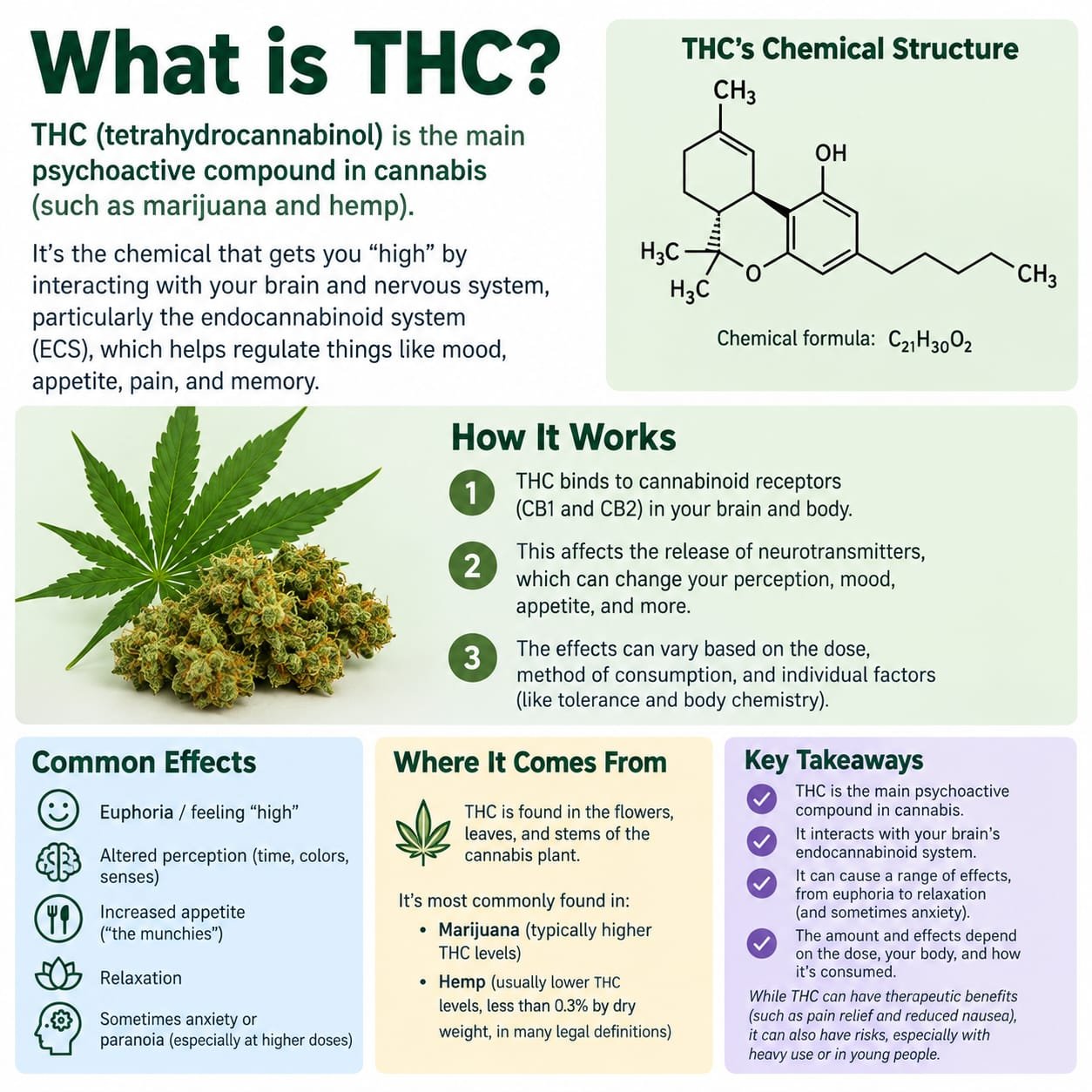
THC, short for tetrahydrocannabinol, is the main intoxicating compound in cannabis. It is primarily responsible for the “high” associated with marijuana, including changes in mood, perception, memory, and coordination. However, THC does more than produce intoxication. It affects several brain functions, has uses in certain prescription medicines, and carries health risks that vary depending on the product and person.
Understanding THC means looking beyond familiar labels such as cannabis, marijuana, and hemp. Different products can contain very different amounts of THC, and the way someone consumes it can change how quickly effects appear and how long they last. This guide explains what THC is, how it works, how it differs from CBD, and why its potential benefits must be considered alongside its risks.
What Does THC Stand For?
THC stands for tetrahydrocannabinol. In most conversations about cannabis, the term refers to delta-9-tetrahydrocannabinol, usually shortened to delta-9 THC. This is the compound identified as the primary intoxicating component of cannabis. Other forms, including delta-8 THC, also exist, but they should not be treated as identical products with interchangeable safety profiles.
THC belongs to a group of cannabis compounds called cannabinoids. Cannabidiol, better known as CBD, is another member of this group. Although THC and CBD come from the same plant, they have different effects. Knowing which cannabinoids a product contains is more informative than relying on a broad description such as “plant-based” or “hemp-derived.”
How Does THC Affect the Brain?
THC influences brain cells in regions involved in memory, emotions, judgment, and coordination. It can disrupt communication between brain regions and change how information is processed. These effects help explain why someone may feel relaxed while also becoming less attentive, less coordinated, or less capable of making sound decisions.
The effects are not limited to one sensation. THC can alter a person’s sense of time, make surroundings feel different, and interfere with short-term memory. A conversation may become harder to follow, or a simple task may require more effort. Feeling comfortable or confident does not mean these abilities remain unaffected.
This distinction matters because intoxication is both an experience and a functional change. Someone may enjoy the experience while underestimating its effects on reaction time or judgment. THC-related impairment can therefore create problems during activities requiring attention, accurate decisions, balance, or quick responses.
What Does a THC High Feel Like?
There is no single experience that describes every THC high. Some people report happiness, relaxation, increased appetite, or an altered sense of time. Others experience anxiety, fear, distrust, or panic. The same person may react differently on separate occasions, particularly when the amount consumed or the product changes.
Common short-term effects include:
- Feeling relaxed, happy, or unusually absorbed in an experience.
- Changes in time perception and sensory processing.
- Increased hunger and a faster heartbeat.
- Reduced coordination, attention, or short-term memory.
- Anxiety, paranoia, or panic, especially after larger amounts.
More severe reactions can include difficulty distinguishing reality from imagined experiences, sometimes described as a psychotic episode. This does not happen to everyone, but it is an important reason to avoid presenting THC as a harmless relaxation aid. Positive experiences and serious adverse reactions are both part of its effects.
Why THC Affects People Differently
A product’s THC concentration is only one factor shaping its effects. Frequency of use, previous experience, biology, method of consumption, and use of other substances also matter. Consequently, another person’s experience is not a reliable forecast of how a particular product will affect someone else.
The form of the product is especially important. Cannabis flower, concentrated oils, and infused foods can differ substantially in strength and timing. A familiar-looking gummy may produce stronger or longer-lasting effects than expected. Packaging and serving size do not necessarily communicate how intense the experience will be.
Combining cannabis with alcohol or other drugs can increase the risk of harm. Medication use can also influence the duration or intensity of edible effects. These interactions make individualized medical guidance important, particularly for people using prescription treatments or managing an existing health condition.
THC vs. CBD: What Is the Difference?
THC and CBD are frequently mentioned together, but they should not be confused. THC is impairing and produces the characteristic cannabis high. CBD is a different cannabinoid and does not produce that same intoxicating effect. However, a product marketed as CBD or hemp may still contain intoxicating cannabinoids.
The distinction between a compound and a commercial product is crucial. A CBD label does not establish that a product is THC-free, accurately formulated, or medically effective. Products labeled as hemp or CBD may contain delta-8 THC and can therefore cause psychoactive effects.
There is also a difference between approved medicines and general retail products. The United States Food and Drug Administration has approved a purified CBD prescription medicine for specific seizure disorders. That approval does not extend to every CBD oil, gummy, or supplement, just as approval of a THC-related medicine does not validate all cannabis products.
Delta-9 THC vs. Delta-8 THC
Delta-9 THC is the main intoxicating component typically associated with cannabis. Delta-8 THC is another psychoactive cannabinoid found in the plant, but it does not naturally occur in significant quantities. Concentrated delta-8 products are therefore typically manufactured from hemp-derived CBD rather than simply extracted in large amounts from cannabis.
Delta-8 is sometimes promoted in ways that suggest a gentler or safer experience. Such marketing should not replace safety evidence. The FDA states that delta-8 products have not been evaluated or approved for safe use in any context, while their health effects are not well understood.
Delta-8 can still cause intoxication and impairment. Its presence in a hemp-derived product does not make it equivalent to nonintoxicating CBD. Consumers should distinguish the source of a product from its effects: “made from hemp” describes an origin, not a guarantee of safety or freedom from a high.
Common Types of THC Products
THC-containing cannabis comes in several forms. These include dried plant material, oils, concentrates, capsules, and foods or drinks infused with cannabis. The delivery method changes the experience and introduces different risks, so products should not be treated as interchangeable simply because they contain the same cannabinoid.
Smoking introduces risks associated with smoke exposure. Vaping avoids combustion but is not risk-free; cannabis vaping has been associated with serious lung injury. Concentrates used in vaping or dabbing can contain high THC concentrations and may also contain additives or contaminants that introduce additional concerns.
Edibles avoid inhaling smoke, but their delayed effects create another problem: someone may consume more before the initial serving takes effect. Oils and other formulations also require careful attention to labeling. No consumption method removes the impairment associated with THC or guarantees a predictable response.
How Quickly Does THC Work?
Timing depends substantially on how THC enters the body. Inhaled cannabis generally produces effects sooner than cannabis consumed in food or drinks. Edibles can take 30 minutes to two hours to produce noticeable intoxication, making them particularly easy to underestimate during the waiting period.
That delay helps explain many accidental overconsumption incidents. Someone may assume an edible is ineffective and consume another portion. When the effects eventually emerge, the combined amount may cause unexpectedly intense intoxication, anxiety, or illness. Delayed onset is therefore a safety issue, not merely an inconvenience.
How Long Do THC Effects Last?
The noticeable effects of smoked cannabis generally last around one to three hours, while cannabis consumed in food or drinks can produce effects lasting many hours. These are broad patterns rather than dependable personal timelines. Product strength, amount consumed, medications, alcohol, and other factors can change the duration.
Detectability is different from intoxication. THC can remain detectable in the body for days or weeks after the noticeable effects have ended. A detection window should therefore not be mistaken for the duration of a high, and a fading high should not automatically be interpreted as restored performance.
Does THC Have Medical Uses?
THC-related compounds have legitimate uses in specific prescription medicines. In the United States, the FDA has approved Marinol and Syndros, which contain dronabinol, a synthetic form of delta-9 THC. Their approved uses include nausea associated with cancer chemotherapy and appetite loss associated with weight loss in AIDS patients.
The FDA has also approved Cesamet, containing the synthetic cannabis-related compound nabilone. These medicines are distinct from ordinary cannabis products: their approval concerns particular formulations and intended uses. A prescription medicine with defined indications is not equivalent to a retail edible marketed with broad wellness claims.
The FDA has not approved cannabis itself as a treatment for any disease or condition. This distinction does not mean every proposed use lacks research, but it does mean claims require careful evaluation. Testimonials, traditional use, and commercial availability are not substitutes for evidence about a specific treatment.
What Are the Main Health Risks of THC?
THC can impair memory, attention, coordination, and decision-making. These effects matter at school, at work, and during everyday activities. Anxiety and panic can also occur, while a faster heartbeat may make the experience more distressing. Higher amounts can produce stronger effects and more severe reactions.
Heavy or frequent cannabis use raises additional concerns. Daily or near-daily use can damage memory, attention, and learning ability, with effects potentially lasting a week or more after the last use. Smoking cannabis can also harm the lungs and cardiovascular system.
Repeated use can sometimes lead to severe nausea and vomiting requiring medical attention. This is especially important because cannabis-related medicines can treat nausea in specific circumstances, yet frequent use of higher-THC cannabis products can contribute to vomiting. The medical context and pattern of use matter.
Can THC Be Addictive?
Yes. Cannabis products containing THC can contribute to cannabis use disorder, a substance use disorder associated with problematic use. Chronic, heavy use—every day or almost every day—is a pattern associated with developing this condition. Cannabis being plant-derived does not eliminate its addiction potential.
Problematic use is not simply a question of whether someone enjoys cannabis. A central concern is continuing to use despite negative consequences. Changes affecting school, employment, relationships, or well-being should not be dismissed because cannabis is widely available or perceived as less dangerous than some other substances.
Who Should Be Especially Cautious?
Young people face particular concerns because brain systems continue developing through young adulthood. Regular cannabis use during adolescence may negatively affect cognitive development. THC-related changes in memory, learning, and judgment are especially relevant when education and the development of long-term skills are priorities.
Pregnancy and breastfeeding also require caution. Cannabis use during pregnancy may adversely affect fetal development, and THC can pass to a baby through breast milk. These concerns make professional medical guidance more appropriate than advice drawn from product marketing or anecdotes about cannabis use.
Children can become seriously ill after accidentally consuming THC products. Some edibles resemble familiar sweets or snacks, increasing the risk of unintentional ingestion. Secure storage is therefore essential, and caregivers should not assume that a small-looking edible represents a small or harmless exposure.
THC, Driving, and Accidental Poisoning
THC can slow reactions, reduce coordination, and impair the ability to respond to road conditions. Feeling relaxed or believing the effects have diminished does not establish fitness to drive. The same concern applies to operating machinery or performing other tasks where an error could cause injury.
Accidental poisoning is another significant risk, especially with edibles. Seek urgent medical help for serious symptoms such as difficulty breathing or severe problems with movement or responsiveness. Children exposed to THC may struggle to walk or sit up and can develop breathing difficulties requiring medical attention.
Understanding THC Beyond the High
THC is an active compound with intoxicating effects, specific medical applications, and meaningful health risks. Understanding it requires separating approved medicines from retail products, CBD from intoxicating cannabinoids, and subjective enjoyment from actual impairment.
The most useful approach is to evaluate the particular product, its strength, its method of consumption, and the circumstances of use. Labels and marketing cannot replace those distinctions. THC is neither adequately explained by promises of relaxation nor by its reputation alone; its effects depend on exposure, individual factors, and context.